Key Bowl or Bag Pocket? Giving Everyday Items a Consistent Place
A key bowl or bag pocket can make everyday essentials easier to find. Match the landing place to your routine and avoid last-minute searching.
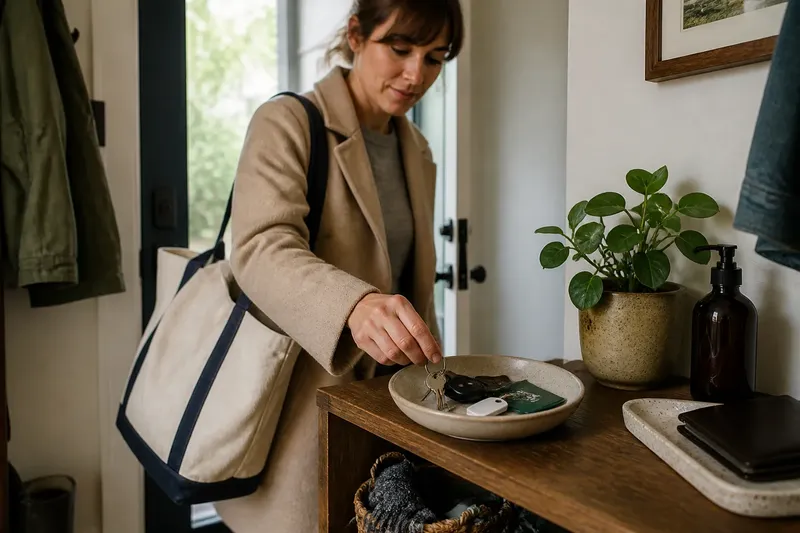
A key bowl or bag pocket works only when it matches the moment you actually put your things down. If you search for your keys while one shoe is on and the door is waiting, the problem may not be forgetfulness; it may be that your routine has no dependable landing place. The useful choice is between a home base for items you set down and a dedicated pocket for items that travel with you.
Which routine should the landing place support?
A fixed spot at home suits a routine that ends with emptying your pockets or placing your bag near the entrance. A dedicated pocket suits someone who carries the same bag from one errand to the next and wants keys and small essentials to remain together. Neither arrangement is inherently better. The test is whether you can use it without adding a fussy extra motion.
Think of the spot as a hook on a coat: useful because it is where your hand naturally goes, not because it is the most elegant place in the room. A ceramic bowl on a shelf can catch keys, a transit card, and earbuds, but it will not help much if you usually walk past it to drop your bag in the kitchen.
Choose one main arrangement for the items you reach for before leaving. If keys live in a bowl and a spare set lives in the bag, make that distinction deliberate. Two competing “usual” places create the very search you hoped to avoid.
Why do keys still disappear in a tidy home?
What happens: You arrive home, set down your keys while carrying groceries, and later cannot remember where they went. Likely cause: The designated spot is out of the path you take on arrival, or your hands are too full to use it.
What to try: Move the bowl or small tray to a stable surface near the door where you already pause. Keep the landing place clear enough to accept keys quickly; it need not be decorative or elaborate. If you enter through different doors, pick the one used most often and decide how you will handle arrivals through the other one.
Say you usually enter through the side door with a tote and groceries. You could place a shallow tray on the shelf beside that entrance, then make setting the keys there the first thing you do after putting down the tote. The observable result to look for is simple: when leaving, you know which surface to check before searching elsewhere. If that motion feels awkward, the spot is poorly placed rather than proof that you need more discipline.
Why do bag-pocket systems stop working?
What happens: Your keys are in the bag, but you still have to rummage for them. Likely cause: The “key pocket” also holds receipts, lip balm, coins, or a tangle of earbuds, so it has stopped being a distinct place.
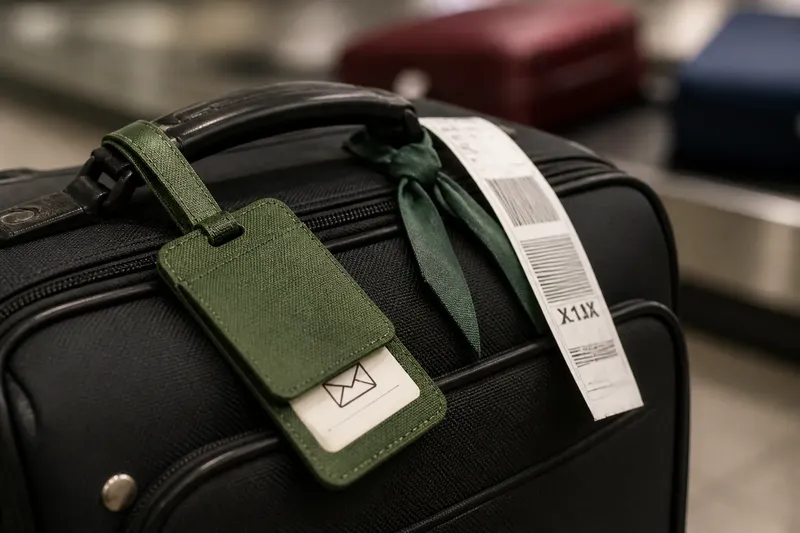
What to try: Give keys one pocket with a clear boundary, ideally a zipped or otherwise easily recognized compartment. Keep small essentials that you need together in a pouch or a neighboring pocket, rather than letting loose objects collect around the keys. Choose a pocket you can reach while wearing the bag; a compartment that requires taking everything out is a storage space, not a useful landing place.
Bag changes create another snag. If you switch between a work tote and a smaller bag, keys can remain in yesterday’s pocket. Either keep the keys in one familiar bag or make a deliberate transfer part of the changeover: move the keys, transit card, and any other item you need before leaving the old bag behind. Avoid relying on memory later in the day.
How can you tell whether the home spot or bag pocket is the better fit?
- Choose a home landing spot if you routinely unload your pockets or bag as soon as you arrive and tend to leave from the same entrance.
- Choose a dedicated bag pocket if you carry the same bag through several stops and prefer essentials to stay with you.
- Choose a simple combination if keys travel in the bag during the day but need a clear home place when you return. Decide that keys move from pocket to tray at arrival, rather than treating both as interchangeable locations.
- Reconsider the arrangement if you regularly set down keys in another room, change bags without transferring them, or have to empty a compartment to find them.
A combined system is helpful only if it has an obvious direction. For example, keys can move from a dedicated bag pocket to the home tray at arrival, then back into that pocket before the next outing. This is different from keeping a few possible places and hoping you recall which one held the keys.
What should share the same place?
Group items by the moment you need them, not by size alone. Keys, a building fob, or a transit card may belong together if you routinely use them on the same departure. A wallet, medication, or device may need its own secure and accessible storage, depending on your needs. Avoid making a communal bowl the default for anything you would not want visible or easy for others to pick up.
Keep the landing area limited to the items that actually support leaving or arriving. A bowl that becomes a catchall for mail and loose change can hide keys beneath clutter. A bag pocket that fills with unrelated objects becomes hard to search. If clutter returns, remove items that do not belong and adjust the container or pocket to suit the essentials you carry.
What if the routine changes from day to day?
What if I use several bags?
Choose one bag as the default home for keys, or transfer them deliberately whenever you change bags. A short glance into the chosen pocket before leaving can confirm the move without turning the check into a search.
Should I keep a spare key in the bag?
That depends on who could access the bag and what the key opens. Consider a secure alternative for a spare, and do not attach identifying details that could connect the key to your home.
What if someone else in the household uses the same landing spot?
Agree on a shared surface and give each person a distinct tray, hook, or section. A simple separation reduces mix-ups without requiring everyone to adopt identical routines.
How long should I try a new location?
Use it through ordinary arrivals and departures, then notice where your hand goes and where keys actually land. If you keep bypassing the spot, move it to fit the routine instead of adding reminders for a location you do not naturally use.
When should you change the setup?
Change it when the entry path, bag, or daily pattern changes, or when you keep finding the items somewhere else. Make one adjustment at a time: move the tray, clear the pocket, or settle on a default bag. Then check whether the new place is easy to use with full hands, in a hurry, and during a normal return home.
The best key bowl or bag pocket is the one that makes the next action plain. Give essentials a consistent place, keep that place suited to the way you enter and leave, and let repeated use reveal when the arrangement needs a small revision.